Another recall, this time for more than 47 million pounds of meat and poultry products, was announced Wednesday in connection with the CRF Frozen Foods recall linked to a multi-state Listeria outbreak With establishments in Los Angeles, Fort Worth, TX, Carthage, MO, and Portland, OR, Ajinomoto Windsor Inc. is recalling 47,112,256 pounds of not-ready-to-eat meat and poultry products that may be adulterated with Listeria monocytogenes, according to the the U.S. Department of Agriculture’s Food Safety and Inspection Service (FSIS). The heat-treated, not fully cooked, not shelf stable meat and poultry items were produced on various dates between May 1, 2014, and May 1 this year. The following products are subject to recall:
- 14.2-oz packages containing “Tai Pei Chicken Fried Rice” with best-by dates ranging from 01/02/2015 to 10/27/2017.
- 14.2-oz packages containing “Tai Pei Pepper Beef” with best-by dates ranging from 11/02/2015 to 10/19/2017.
- 12-oz packages containing “Tai Pei Combination Fried Rice” with best-by dates ranging from 11/06/2015 to 10/27/2017.
- 12-lb cases containing 32-oz packages of “Fred’s Jalapeño, Corn & Bacon Cornbread Pop” with product code 0945137.
- 2-lb boxes containing “InnovASIAN Cuisine CHICKEN FRIED RICE” with best-by dates ranging from 5/15/2015 to 4/09/2017.
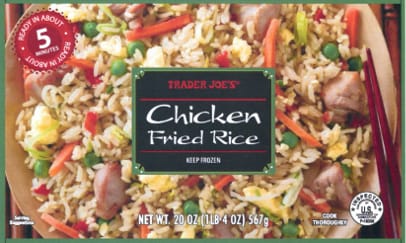
- 20-oz packages containing “Trader Joe’s Chicken Fried Rice” with case codes ranging from 261231 to 281211.
- 18-oz. bags containing “InnovASIAN Cuisine CHICKEN FRIED RICE” with best-by dates ranging from 05/01/2015 to 04/29/2017.
- 18-oz. and 24-oz. packages containing “Simmering Samurai Orange Chicken Fried Rice” with best-by dates ranging from 5/12/2015 to 3/18/2017.
- 20-oz. packages containing “HyVee chicken fried rice” with best-by dates ranging from 7/11/2015 to 3/03/2017.
- 20-oz. packages containing “First Street Chicken Fried Rice” with best-by dates ranging from 7/11/2015 to 3/15/2017.
- 54-oz. packages containing “Yakitori Chicken with Japanese-Style Fried Rice” with best-by dates ranging from 6/28/2015 to 5/2/2017.
- 18-oz. packages containing “Simmering Samurai Chicken Fried Rice” with best-by dates ranging from 8/11/2015 to 3/18/2017.
- 18-oz. packages containing “Simmering Samurai Hibachi Seasoned Chicken Fried Rice” with best-by dates ranging from 8/11/2015 to 11/16/2016.
- 18-oz. packages containing “Simmering Samurai Spicy Hibachi Seasoned Chicken Fried Rice” with best-by dates ranging from 8/13/2015 to 11/16/2016.
- 18 oz. and 24-oz. packages containing “Simmering Samurai General Tso’s Chicken Fried Rice” with best-by dates ranging from 8/18/2015 to 12/26/2016.
- 1.53-kg packages containing “Arroz Frito Estilo Japones Con Pollo Yakitori” with best-by dates ranging from 1/22/2016 to 1/03/2017, exported to Mexico.
- 1.53-kg packages containing “Yakitori Chicken with Japanese-Style Fried Rice (Poulet Yakitori Avec Riz Frit A La Japonaise)” with best-by dates ranging from 1/21/2016 to 3/7/2017, exported to Canada.
- 30-oz. packages containing “Daily Chef Chicken Poblano Firecrackers” with packaging dates between 8/10/2015 to 1/25/2016.
- 12.5-lbs packages containing “Golden Tiger SANTA FE BRAND CHICKEN EGG ROLLS” with packaging dates between 8/22/2014 to 11/6/2015.
- 6.25-lb packages cases containing “Jade Mountain SOUTHWEST CHICKEN EGG ROLL TWISTS” with packaging dates between 6/3/2014 to 3/23/2016.
- 30-oz packages containing 30 pieces of “Petite Cuisine CHICKEN POBLANO Hand Made Firecrackers” with packaging dates between 7/15/2014 to 1/15/2016.
- 6.25-lbs. cases containing “Golden Tiger Firecracker Southwest Brand Chicken” with packaging dates between 6/2/2014 to 3/23/2016.
- 7.5-lbs. packages containing “Posada Southwest Brand CHICKEN EMPANADA” with packaging dates between 5/12/2014 to 3/8/2016.
- 8-oz packages containing 8 pieces of “The Original Appetizer Company CHICKEN POBLANO Handmade Appetizers (Firecracker) with packaging date of 11/4/2014.
- 30-oz packages containing 30 pieces of “Petite Cuisine SOUTHWEST CHICKEN Handmade Firecrackers” with packaging dates between 10/9/2014 to 11/6/2014.
- 8-oz packages containing 8 pieces of “Taste of Inspirations Chicken Poblano Firecrackers” with packaging dates between 8/12/2015 to 2/26/2016.
- 6.89 kg. cases containing packages of “Golden Tiger SOUTHWEST SPICY CHICKEN SPRING ROLLS” with packaging dates between 5/7/2014 to 3/31/2016.
- 8-oz. packages containing “archer farms Chicken Poblano Firecrackers” with packaging dates between 7/15/2014 to 3/21/2016.
- 1.15-kg packages of “Molly’s Kitchen Mini Chicken Pot Pie Empanadas” with packaging dates between 6/4/2014 to 1/7/2015.
- 7.5-lb packages of “CASA SOLANA SOUTHWEST BRAND CHICKEN EMPANADA MADE IN CALIFORNIA” with packaging dates between 11/4/2014 to 2/16/2016.
- 15-lbs packages of “Perkins SOUTHWEST STYLE CRISPY ROLL” with a packaging date of 3/11/2015 and date code 5255070.
- The products subject to recall bear establishment number “EST. 21225,” “EST. 9281,” “EST. 1623A” or “EST. 18356” inside the USDA mark of inspection. These items were shipped nationwide and to Canada and Mexico.
The problem was discovered when Ajinomoto Windsor Inc. was notified by CRF Frozen Foods that its frozen vegetables, which are used in Ajinomoto Windsor’s products were involved in a recall. CRF Frozen Foods of Pasco, WA, voluntarily recalled frozen fruit and vegetable items due to an illness outbreak of listeriosis. There have been no confirmed reports of illness or adverse reactions due to consumption of Ajinomoto Windsor Inc.’s products. The CRF Frozen Foods’ recall is posted on the Food and Drug Administration’s website. Consumption of food contaminated with Listeria monocytogenes can cause listeriosis, a serious infection that primarily affects older adults, persons with weakened immune systems, and pregnant women and their newborns. Less commonly, persons outside these risk groups are affected. Listeriosis can cause fever, muscle aches, headache, stiff neck, confusion, loss of balance and convulsions sometimes preceded by diarrhea or other gastrointestinal symptoms. An invasive infection spreads beyond the gastrointestinal tract. In pregnant women, the infection can cause miscarriages, stillbirths, premature delivery or life-threatening infection of the newborn. In addition, serious and sometimes fatal infections in older adults and persons with weakened immune systems. Listeriosis is treated with antibiotics. Persons in the higher-risk categories who experience flu-like symptoms within two months after eating contaminated food should seek medical care and tell the health care provider about eating the contaminated food. FSIS and the company are concerned that some product may be frozen and in consumers’ freezers. Consumers who have purchased these products are urged not to consume them. These products should be thrown away or returned to the place of purchase. FSIS routinely conducts recall effectiveness checks to verify recalling firms notify their customers of the recall and that steps are taken to make certain that the product is no longer available to consumers. When available, the retail distribution list(s) will be posted on the FSIS website at www.fsis.usda.gov/recalls. FSIS advises all consumers to reheat ready-to-eat products until steaming hot.


