Oyster and clam harvesting has been shut down on a stretch of the Little Wicomico River in Northumberland County in Virginia after state health officials traced a Salmonella outbreak in Pennsylvania back to shellfish pulled from those waters.
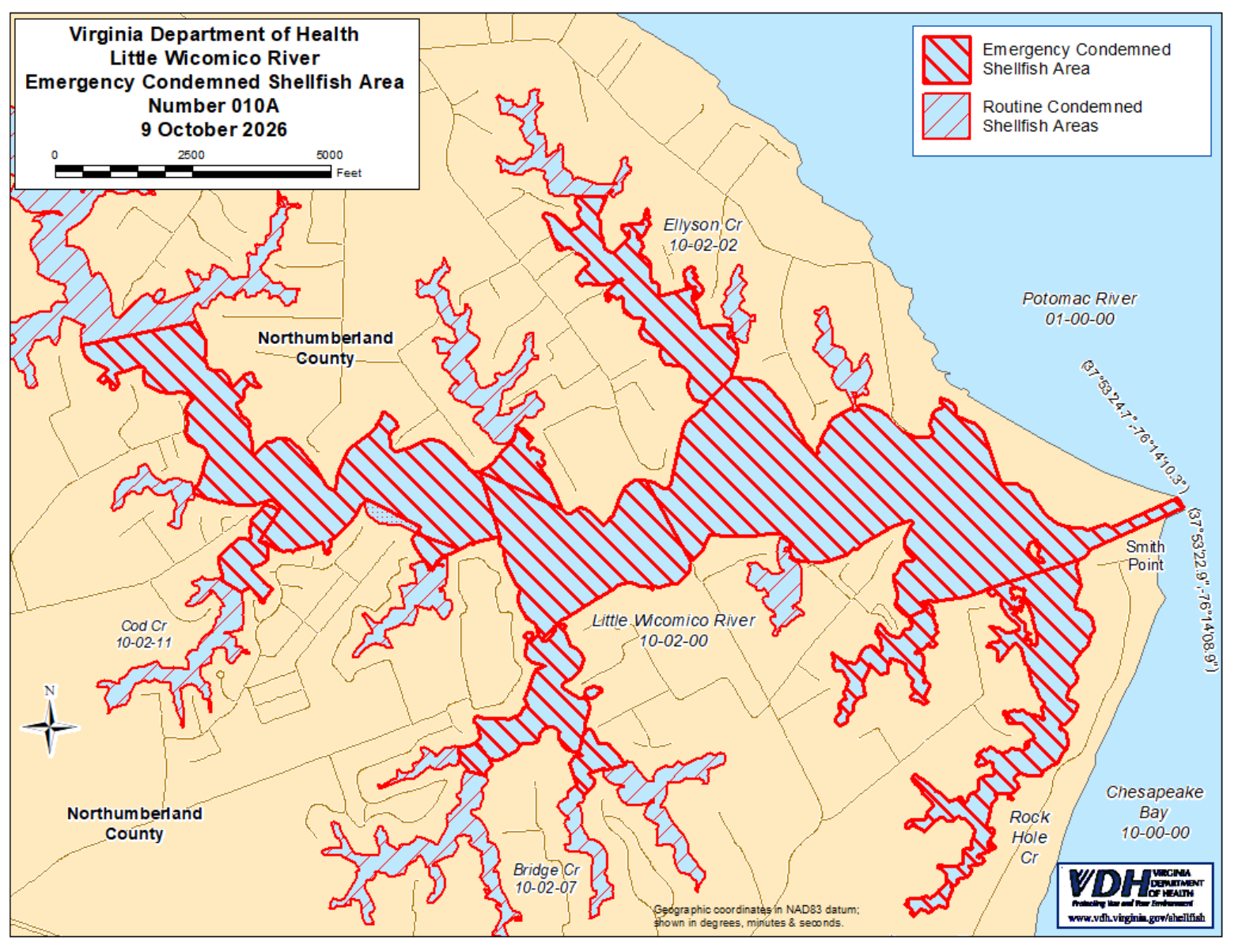
Virginia health officials closed the river to harvesting on Oct. 9, just eight days into the state's new oyster season, after an epidemiological link connected the illnesses to oysters harvested there.
The Pennsylvania outbreak has sickened at least five people so far, according to the Virginia Department of Health. The agency's Emergency Condemnation order #010A, closes downstream waters of the Little Wicomico River between a specific set of coordinates, according to the Virginia Department of Health. The closure runs through Nov. 7.
State officials said the move was made out of an abundance of caution and in direct conformance with recommendations from the U.S. Food and Drug Administration, the health department confirmed Friday.
Crabs and finfish can still be harvested from the affected waters during the closure, and shellfish within the closure zone are being actively tested. Officials also stressed that the harvesting closure has no impact on drinking water.
The Little Wicomico closure isn't the only one in the region right now. The health department also issued a second emergency shellfish closure on Oct. 9, Emergency Condemnation #005-083B, temporarily barring harvesting in portions of Lower Machodoc Creek in nearby Westmoreland County through Oct. 29.
While in effect, the ban makes it illegal to harvest, store, or transport shellfish from condemned areas without a special permit from the Marine Resources Commission.
Virginia's 2026–2027 public oyster harvest season officially opened across public grounds on Oct. 1, meaning the Little Wicomico closure arrived just over a week into the fall season, according to Virginia Marine Resources Commission notices.
The state's public oyster grounds produce roughly 250,000 bushels annually, backed by a replenishment program that the commission says pours between $4 million and $10 million a year into reef maintenance and shell planting.
About Salmonella infections
Food contaminated with Salmonella bacteria does not usually look, smell, or taste spoiled. Anyone can become sick with a Salmonella infection. Infants, children, seniors, and people with weakened immune systems are at higher risk of serious illness because their immune systems are fragile.
Anyone who has eaten any clams from the affected area and developed symptoms of Salmonella infection should seek medical attention. Sick people should tell their doctors about the possible exposure to Salmonella bacteria because special tests are necessary to diagnose salmonellosis. Salmonella infection symptoms can mimic other illnesses, frequently leading to misdiagnosis.
Symptoms of Salmonella infection can include diarrhea, abdominal cramps, and fever within 12 to 72 hours after eating contaminated food. Otherwise, healthy adults are usually sick for four to seven days. In some cases, however, diarrhea may be so severe that patients require hospitalization.
Older adults, children, pregnant women, and people with weakened immune systems, such as cancer patients, are more likely to develop a severe illness and serious, sometimes life-threatening conditions.
Some people get infected without getting sick or showing any symptoms. However, they may still spread the infections to others.